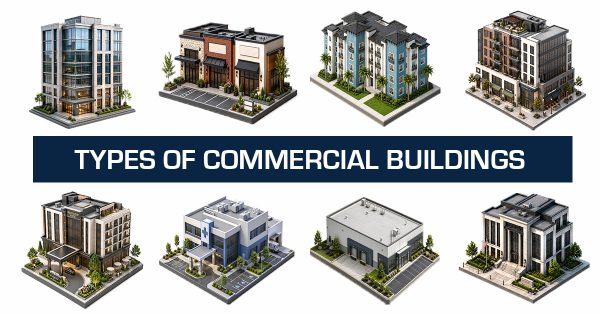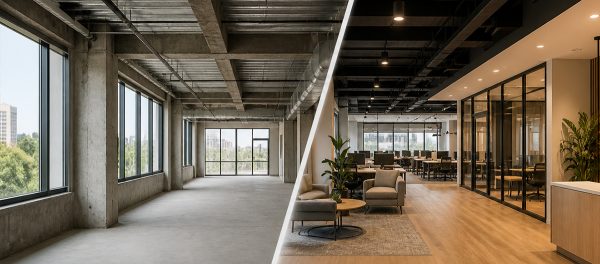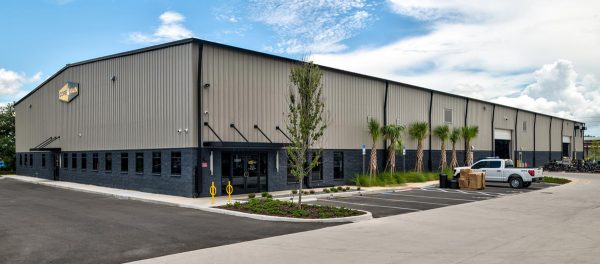
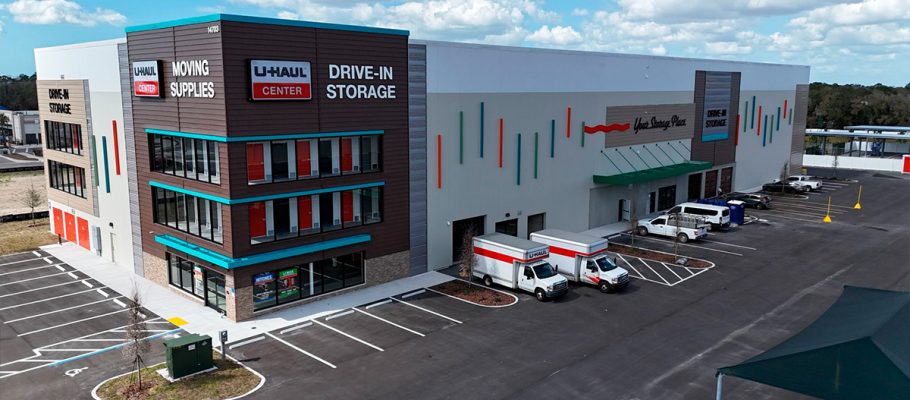
A commercial building is a structure used for business activities, public services, or income-producing purposes. It includes offices, retail stores, warehouses, healthcare facilities, restaurants, and similar properties. Because these buildings are designed for higher occupancy and public access, they must comply with commercial building codes and zoning regulations.
If you’re trying to figure out whether a property falls under commercial rules, that’s an important question. Once a building is classified as commercial, everything changes: permitting, inspections, fire protection, accessibility requirements, and even insurance standards.
This guide will help you understand what qualifies as a commercial building and what that classification really means for your project.
As commercial contractors serving Central Florida since 1970, we deal with this distinction every day. And from experience, we can tell you this: understanding the rules, classifications, and limitations of commercial buildings from the start saves time, protects your budget, and prevents costly surprises later.
If you want your project to move smoothly from day one, it starts with getting the basics right.
Key Takeaways
- A commercial building is any structure used for business, public service, or income-generating activity.
- It is classified based on occupancy type, not just ownership.
- Commercial buildings must meet stricter building codes than residential properties.
- Zoning and use determine whether a structure qualifies as commercial.
- Misclassification can lead to permit delays and costly redesigns.
Commercial Building Definition
A commercial building is a structure designed and used for business activities, public access, or income-producing purposes. It includes offices, retail stores, healthcare facilities, warehouses, and other properties where commerce or services take place.
In simple terms, if the building exists to operate a business or serve the public, it’s commercial.
This classification isn’t just about how the building looks. It’s about how it’s used and how it’s regulated. Commercial buildings must comply with stricter safety standards, accessibility requirements, and occupancy rules than residential structures.
If you’re trying to understand how commercial construction works overall, our guide on what is commercial construction walks through the full picture.

What Defines a Commercial Building?
A building is defined as commercial based on its use, occupancy classification, and zoning designation. If it supports business operations, public services, or revenue-generating activity, it is generally considered commercial under building codes.
Here’s what typically defines a commercial building:
| Defining Factor | What It Means in Practice |
|---|---|
| Primary Use | Business operations, retail sales, services, manufacturing, or public access |
| Occupancy Type | Classified as business, mercantile, industrial, healthcare, or assembly |
| Zoning | Located in a commercially zoned district |
| Code Requirements | Must meet commercial building code standards |
| Public Access | Often open to customers, employees, or the public |
It’s not about who owns the building. It’s about how it functions.
For example, a multi-tenant office building, a retail strip center, and a medical clinic are commercial. Even some multi-family properties fall under commercial building codes depending on size and configuration.
Understanding occupancy classification is critical. If a property is misclassified, it can trigger permit denials, redesign requirements, or inspection delays. That’s why early planning matters.
AJC Pro Insight:
Before you buy or renovate a property, confirm both zoning and occupancy classification with the local building department. We’ve seen projects delayed for months because a property was assumed to be commercial, but was zoned differently. A 15-minute call early on can save thousands later.

Commercial vs Residential Buildings
Commercial and residential buildings differ primarily in purpose, occupancy load, and code requirements. Commercial buildings support business or public activity, while residential buildings are designed for people to live in. Because of that difference, commercial structures must meet stricter safety, accessibility, and structural standards.
Here’s a clear comparison:
| Factor | Commercial Building | Residential Building |
|---|---|---|
| Primary Use | Business operations, retail sales, public services | Private living space |
| Occupancy Load | 50–500+ occupants depending on use | Typically 1–10 occupants |
| Code Requirements | International Building Code (IBC) or state commercial code | International Residential Code (IRC) or state residential code |
| Fire Protection | Fire sprinkler systems often required; fire-rated walls (1–2 hour ratings common) | Sprinklers often not required in single-family homes |
| ADA Compliance | Accessible parking, entrances, restrooms required | Not required for single-family homes |
| Permitting | Structural, mechanical, electrical, plumbing, fire marshal, and accessibility reviews are typically required | Usually structural and basic MEP review only; no fire marshal review for single-family homes |
The biggest difference? Complexity.
Commercial buildings handle more people, more liability, and more regulation. That’s why the design, engineering, and inspection process is more involved.
What Is Considered a Commercial Property?
A commercial property is real estate used for business operations, income generation, or public services. It includes buildings and land designated for commercial use under local zoning regulations.
In short, if the property exists to operate a business or produce revenue, it’s considered commercial.
Here’s what typically qualifies:
| Property Type | Considered Commercial? | Notes |
|---|---|---|
| Office Building | Yes | Business occupancy |
| Retail Store | Yes | Mercantile occupancy |
| Restaurant | Yes | Assembly occupancy |
| Warehouse | Yes | Storage & distribution |
| Medical Office | Yes | Healthcare occupancy |
| Single-Family Home | No | Residential occupancy |
| Duplex | Usually Residential | Depends on local classification |
| Large Apartment Complex | Often Commercial | Multi-family may fall under commercial code |
This is where zoning plays a major role. A property might look residential but be zoned commercial or vice versa.
Before purchasing land or starting renovations, it’s smart to verify zoning and occupancy classification.
Getting this right at the beginning prevents costly redesigns and permit delays later.
Examples of Commercial Buildings
Commercial buildings include a wide range of structures used for business operations, public services, or income-producing activity. If people work there, shop there, receive services there, or operate a business there, it’s likely commercial.
Here are common examples:
| Building Type | Typical Use | Common Features |
|---|---|---|
| Office Buildings | Administrative and professional services | Multi-tenant layouts, conference rooms, structured parking |
| Retail Stores | Sales of goods and services | Storefront glass, open floor plans, customer access |
| Restaurants | Food service and dining | Commercial kitchens, fire suppression systems |
| Healthcare Facilities | Medical services and clinics | Specialized plumbing, ventilation, exam rooms |
| Warehouses | Storage and distribution | Large open spans, loading docks, high ceilings |
| Hospitality | Hotels and conference centers | Guest rooms, assembly areas, life-safety systems |
| Religious & Institutional | Worship and public gatherings | Assembly occupancy, larger occupant loads |
Each of these building types comes with different code requirements and operational needs.
At AJ Construction, we’ve delivered projects across nearly every commercial sector. From industrial facilities like Core & Main and Iramed, to healthcare spaces such as Orlando Health CareSpot Urgent Care, to hospitality venues including Villa De Flora Restaurant at Gaylord Palms Resort & Convention Center. Each project falls under commercial classification, but the requirements and complexity vary by use.
You can explore additional examples of our commercial work in our project portfolio.
Commercial in Real Estate vs Commercial in Building Code
The word “commercial” doesn’t always mean the same thing. In real estate, it often refers to income-producing property. In building codes, it refers to which construction standards apply; usually, the International Building Code (IBC) instead of the International Residential Code (IRC).
That difference is where confusion starts, here’s a clear breakdown:
| Context | What “Commercial” Means | Governing Standard |
|---|---|---|
| Real Estate | Property used to generate income (offices, retail, apartment complexes) | Market & financing classification |
| Building Code | Structure regulated under commercial building standards | International Building Code (IBC) |
| Residential Code | 1–2 family dwellings and townhomes (in most cases) | International Residential Code (IRC) |
A 20-unit apartment building is often considered commercial in real estate because it generates rental income. But it’s also built under the International Building Code (IBC) because of occupant load, fire safety requirements, and structural standards.
A duplex, on the other hand, may generate rental income but is often built under the International Residential Code (IRC), depending on jurisdiction.
That’s why classification isn’t just about ownership. It’s about:
- Occupancy load
- Height and number of units
- Fire protection requirements
- Structural design standards
Apartment buildings with three or more units typically fall under the IBC, depending on local amendments, because they require:
- 1-hour or 2-hour fire-rated assemblies
- Fire sprinkler systems (required in most multi-family buildings under IBC Section 903.2)
- More complex egress requirements
- Increased structural load considerations
In summary, “Commercial” in real estate and “commercial” in building code are not always the same thing. Getting that distinction right early can prevent permit delays, redesign costs, and major scheduling setbacks.
AJC Pro Insight:
Multi-family projects are where we see the most confusion. Owners often assume a small apartment building is “residential,” but once it crosses certain unit thresholds, it typically falls under commercial building code. That changes fire ratings, structural design, and cost assumptions quickly.
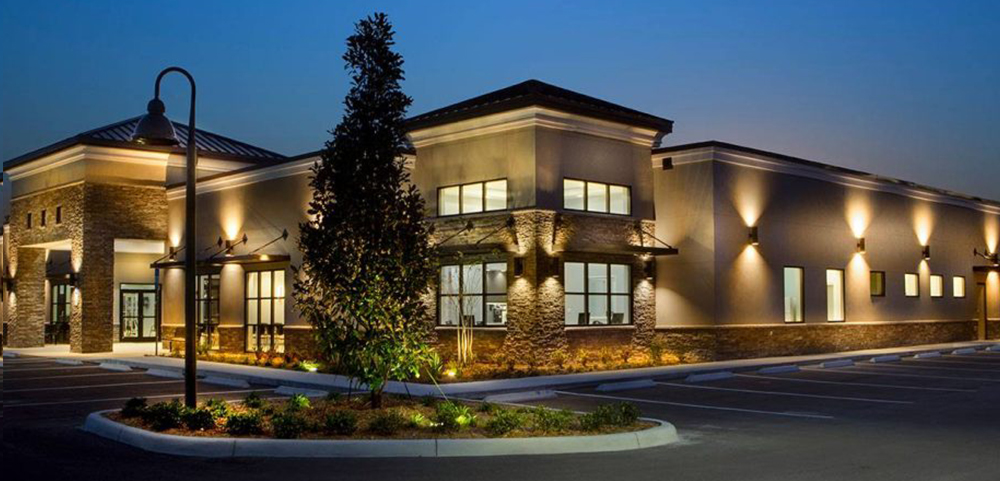
Key Features of Commercial Buildings
Commercial buildings are designed to support higher occupancy loads, public access, and business operations. Because of that, they require more complex systems and stricter compliance standards than residential properties.
Here are the key features of commercial buildings:
| Feature | Why It Matters |
|---|---|
| Higher Occupancy Loads | Designed for employees, customers, or the public |
| Fire Protection Systems | Sprinklers, fire alarms, rated assemblies |
| ADA Accessibility | Required accessible entrances, restrooms, and parking |
| Commercial-Grade Systems | Larger HVAC, electrical, and plumbing systems |
| Structured Parking | Designed to accommodate customer and staff traffic |
| Durable Materials | Built for heavier use and longer operating hours |
In conclusion, commercial buildings are built to perform. They handle more people, more wear and tear, and more regulation.
How Commercial Buildings Are Classified
Commercial buildings are classified based on occupancy type, use, and sometimes quality level. Classification affects building code requirements, insurance rates, property valuation, and financing.
There are two primary ways buildings are classified:
| Classification Type | What It Determines |
|---|---|
| Occupancy Classification | How the building is used (business, mercantile, industrial, healthcare, assembly) |
| Property Class (A, B, C) | Quality, location, age, and investment grade |
Occupancy classification is about safety and regulation. The property class is about market value and quality standards.
For example, an office building may be classified as “Business Occupancy” under building codes, but also marketed as “Class A” based on finishes and location.
Understanding classification early protects your project from missteps. Classification is important because it influences design decisions, permit approvals, and even long-term operating costs.
Common Questions About Commercial Buildings (FAQs)
What defines a commercial building?
A commercial building is defined by its use. If the structure is designed for business operations, public access, or income-generating activity, it is considered commercial under building codes and zoning regulations.
In short, it’s not about who owns it, it’s about how it functions. Office spaces, retail stores, warehouses, and medical facilities all fall under commercial classification because they serve business or public purposes.
What is classed as a commercial building?
A building is classed as commercial when it is used for business, industrial, healthcare, retail, hospitality, or assembly purposes. Classification is typically based on occupancy type under applicable building codes.
Examples include:
- Office buildings
- Restaurants
- Retail centers
- Warehouses
- Medical clinics
- Hotels
If the property supports commerce or public services, it’s generally classified as commercial.
What is the difference between a commercial and a residential building?
The main difference is purpose and regulation. Commercial buildings support business activity and public occupancy, while residential buildings are designed for private living.
Here’s a quick comparison:
| Category | Commercial | Residential |
|---|---|---|
| Primary Use | Business or public services | Private dwelling |
| Code Requirements | Commercial building codes | Residential codes |
| Occupancy Load | Higher | Lower |
| ADA Compliance | Typically required | Not typically required |
Which is an example of a commercial property?
Examples of commercial property include office buildings, retail stores, warehouses, hotels, medical offices, and restaurants. These properties are used to conduct business or provide services.
Even multi-tenant shopping plazas and mixed-use developments fall under commercial property classification when business operations are involved.
How do I know if my building is residential or commercial?
The quickest way to determine this is by checking zoning designation and occupancy classification. Local building departments classify structures based on how they are used, not just how they look.
The fastest way to determine if a building is residential or commercial is to verify zoning, tax classification, and occupancy type with your local municipality. Keep in mind that classification is based on how the building is legally designated and used, not just how it looks.
Here’s how to check step by step:
1. Check Zoning and Official Records
Start with public records.
- Local Zoning Department: Contact your city or county planning department and request the zoning designation for your property. Most municipalities provide online zoning maps.
- Property Tax Records: Review your county property appraiser’s website to see how the property is classified for tax purposes (residential, commercial, mixed-use).
- Property Deed: Check the legal description in your deed or title documents for use restrictions or classification notes.
Zoning determines what the property is allowed to be used for, not necessarily how it’s currently used.
2. Identify the Building’s Use and Unit Count
Next, look at how the structure is actually configured.
| Building Type | Typically Classified As |
|---|---|
| Duplex | Residential (IRC) |
| Triplex or fourplex built as townhouses (each unit runs from foundation to roof with open space on at least two sides) | Often residential (IRC) |
| Triplex or fourplex built as apartments (units stacked or sharing hallways) | Typically commercial under building code (IBC) |
| 5+ unit apartment building | Typically commercial under building code (IBC)l |
As a general rule:
- One- and two-family homes and townhouses up to three stories are typically built under the residential code (IRC).
- Apartment buildings with three or more units are typically regulated under the commercial building code (IBC).
This is where confusion often happens. A 10-unit apartment building produces rental income, so it’s “commercial” in real estate, but it’s also regulated under commercial building code because of life-safety and occupancy requirements.
3. Confirm the Applicable Building Code
If you’re planning renovations or new construction, confirm whether the structure falls under:
- International Residential Code (IRC) – typically 1–2 family homes and townhomes
- International Building Code (IBC) – commercial buildings and larger multi-family properties
You can verify this by speaking with:
- The local building department
- A licensed architect
- An experienced commercial contractor
Conclusion
Understanding what qualifies as a commercial building is more than just a definition exercise. It affects zoning approvals, building code compliance, insurance requirements, financing, and long-term operating costs.
If a building is intended for business operations or public use, it falls into the commercial category. And once it’s classified that way, the standards go up, stricter regulations, higher safety requirements, more coordination, and more oversight during construction.
As experienced commercial contractors serving Central Florida since 1970, we’ve seen firsthand how important it is to get this right from day one. Misclassification can delay permits, increase costs, and throw schedules off track. Proper planning keeps your project moving and protects your investment.
If you have questions about whether your building qualifies as commercial, or if you’re planning a new commercial build, renovation, or tenant improvement, in Orlando or Central Florida, we’re here to help. Request a free consultation by calling 407.298.1550, or filling out a contact form. Our team can walk you through classification, zoning considerations, and the construction process so you can move forward with clarity and confidence.
When you’re ready to take the next step, AJ Construction is here to help you build it the right way.